Rumi Darwaza
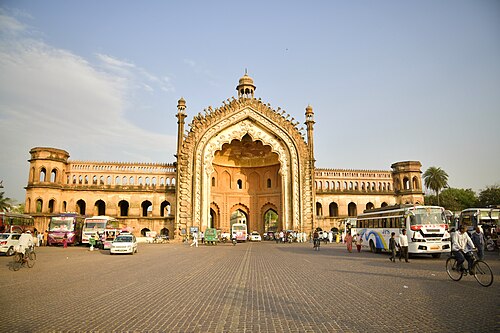
Rumi Darwaza, one of the most iconic symbols of Lucknow’s cultural heritage, stands proudly in the heart of the city as a masterpiece of Awadhi architecture. Built in 1784 under the patronage of Nawab Asaf-ud-Daula, this magnificent gateway is often referred to as the Turkish Gate because of its architectural resemblance to the gateways found in ancient Constantinople (modern-day Istanbul). Today, Rumi Darwaza is a major landmark of Lucknow and a must-visit attraction for travelers exploring the artistic and royal legacy of the Nawabs.
Towering at an impressive height of nearly 60 feet, the gateway is adorned with intricate carvings, floral patterns, and beautifully sculpted niches that showcase the exceptional craftsmanship of 18th-century artisans. The central arch, framed by elegant curves and detailed ornamentation, reflects the luxurious aesthetic of the Awadhi period. At the top of the structure, you can see a small pavilion-like
cupola, which once held a lantern that illuminated the gateway at night—adding to its royal grandeur.
Rumi Darwaza serves as a dramatic entrance to the old city and creates a striking visual connection with nearby architectural marvels such as Bara Imambara and Chota Imambara. The entire area surrounding the gateway buzzes with cultural vibrancy, local markets, traditional eateries, and heritage walks, allowing visitors to fully experience the charm of Lucknow.
For history enthusiasts, photographers, and travelers seeking to explore India’s architectural diversity, Rumi Darwaza offers an unforgettable glimpse into the artistic brilliance of the Nawabi era. Its majestic presence, detailed craftsmanship, and cultural significance make it one of the best places to visit in Lucknow.
Whether you're planning a heritage tour or simply discovering the city’s highlights, a visit to Rumi Darwaza is essential for appreciating the timeless elegance and royal spirit of Awadhi architecture.