Humayun’s Tomb
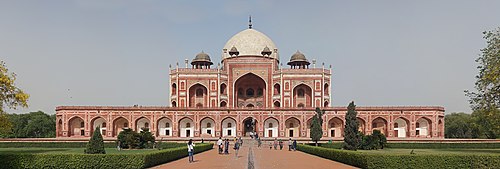
Humayun’s Tomb, located in the heart of New Delhi, is one of India’s most stunning Mughal monuments and a UNESCO World Heritage Site. Built in 1570 by Empress Haji Begum, the wife of Emperor Humayun, this grand mausoleum is celebrated as the first garden-tomb of the Indian subcontinent. Its harmonious blend of Persian, Mughal, and Indian architectural styles later inspired the design of the world-famous Taj Mahal, making it a landmark of immense historical and artistic importance.
The tomb stands majestically on a high, symmetrical platform surrounded by the iconic Charbagh-style gardens, divided into four quadrants by flowing water channels. This beautifully landscaped garden layout reflects the Persian concept of paradise and adds a serene ambience to the entire complex. The monument itself is constructed from rich red sandstone and accented with elegant white marble, creating
a striking visual contrast that shines brilliantly under the Delhi sun.
Inside the central chamber lies the cenotaph of Emperor Humayun, while the surrounding pathways lead visitors to other royal burials of the Mughal dynasty. The complex also includes several historically important structures such as Isa Khan’s Tomb, Arab Serai, and Bu Halima’s Garden, offering a deeper insight into the architectural evolution of the era.
Humayun’s Tomb is not just a masterpiece of design; it is also a peaceful escape from Delhi’s busy streets. Visitors come here to admire its symmetrical beauty, enjoy photography, learn about Mughal history, or simply relax in the tranquil gardens.
Whether you're a history enthusiast, an architecture lover, or a traveler exploring Delhi’s cultural heritage, Humayun’s Tomb is a must-visit destination that showcases the grandeur, artistry, and legacy of the Mughal Empire.