Hawa Mahal
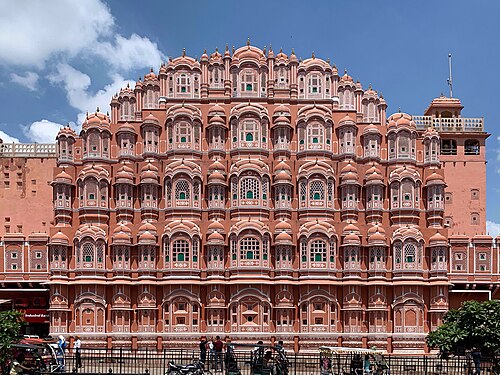
Hawa Mahal, one of the most recognizable landmarks of Jaipur, is a breathtaking example of Rajput architecture and a masterpiece of artistic design. Built in 1799 by Maharaja Sawai Pratap Singh, this five-story palace was crafted by the renowned architect Lal Chand Ustad. Its purpose was to allow the royal women to observe street festivals and daily life while remaining unseen, following the traditions of the royal household. Today, Hawa Mahal stands as a vibrant symbol of Rajasthan’s cultural heritage and attracts visitors from all over the world.
Constructed from red and pink sandstone, the façade of Hawa Mahal resembles a delicate honeycomb with 953 small jharokha-style windows. These intricately carved windows allow cool breezes to flow through the palace, giving it the name “Palace of Winds.” The
lattice design not only keeps the interiors naturally ventilated but also adds to the structure’s visual charm, especially when sunlight creates beautiful patterns on the walls.
Inside, the palace features narrow corridors, small chambers, and charming balconies that offer panoramic views of Jaipur’s bustling streets, including Jantar Mantar and City Palace. The gentle symmetry, elegant arches, and Mughal-inspired embellishments make Hawa Mahal a photographer’s paradise and a must-see attraction in the Pink City.
Located on the busy Johari Bazaar Road, Hawa Mahal is surrounded by vibrant markets selling traditional jewelry, textiles, and handicrafts—making the visit even more memorable.
Whether you're exploring Jaipur’s royal architecture, enjoying heritage walks, or capturing the perfect photo, Hawa Mahal is a must-visit destination that beautifully represents the elegance, history, and cultural richness of Rajasthan.